On this page
Won't Turn Over or Won't Start: Know the Difference
| What happens | What it is called | Where to look |
|---|---|---|
| Nothing, a click, or rapid clicking, and the engine does not spin | No crank, no start (the car won't turn over) | Battery, connections, starter, relay, ignition switch, safety switches |
| The engine spins at normal speed but never fires | Crank, no start | Fuel, spark, sensors or security system |
| The engine spins slowly, struggling | Slow crank | Weak battery, corroded connections, or a starter drawing too much current |
This guide focuses on the first and third rows. If your engine cranks normally but will not catch, the problem is more likely fuel delivery, ignition or a sensor, and a diagnostic scan is the fastest way to find it.
Listen to What the Car Is Telling You
The sound you hear when you try to start the car is the best early clue.
| Sound or sign | Most likely cause | What to try |
|---|---|---|
| Rapid clicking, dash lights dim or flicker | Battery too weak to turn the starter, or a loose or corroded terminal | Check the terminals, then try a jump-start |
| One loud click, lights stay bright | Starter motor, starter solenoid or starter relay | A jump probably will not help. Check the relay and have the starter tested |
| No sound at all, dash lights work | Ignition switch, starter relay, blown fuse, neutral safety switch or brake switch | Check the gear selector and brake pedal, then the fuses and relay |
| No sound and no dash lights | Battery completely flat or a battery cable disconnected | Check the terminals and cables, then jump or charge |
| Slow, labored cranking | Weak battery, cold weather or poor connections | Charge or jump the battery and test it |
| Grinding or whirring without the engine turning | Starter gear not engaging the flywheel | Stop trying and have the starter inspected |
Lights and the radio need far less power than the starter, so working lights do not prove the battery is healthy. A battery can run the dashboard and still be too weak to crank the engine.
Common Reasons a Car Won't Turn Over
Weak or dead battery
This is the most common cause, especially on cold mornings or with a battery more than a few years old. AAA notes that a healthy battery reads about 12.6 volts with the engine off and that most batteries need replacing after three to five years. Our guide on what to do when your car battery is dead covers jump-starting, charging and when to replace it.
Loose or corroded battery terminals
A new battery cannot help if the current cannot get through. Look for white or green crust on the posts and check whether the clamps move by hand. A loose terminal can cause no crank at all, even with a fully charged battery.
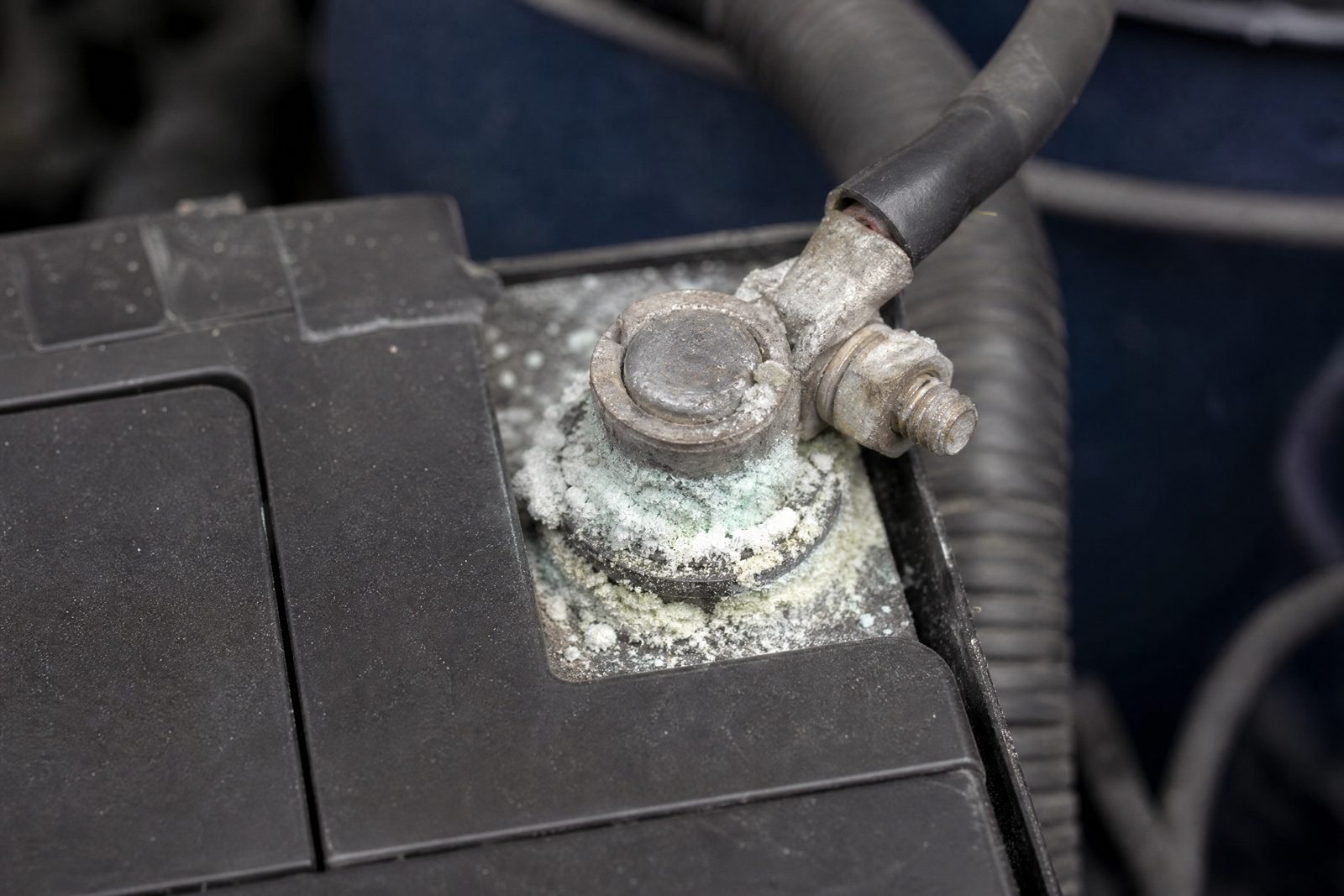
Bad ground cable
The engine and body need a solid ground connection back to the battery. A corroded or broken ground strap can cause clicking or no crank and is easy to miss.
Faulty starter motor or solenoid
A single loud click with bright dash lights, or a grinding noise, usually points here. Firestone notes that most starters last around 100,000 to 150,000 miles, so a starter failure is more common on higher-mileage cars. A jump-start will not fix a bad starter.
Starter relay or blown fuse
The relay sends power to the starter when you turn the key. If it fails, you may hear nothing at all. Your owner's manual shows where the starter relay and fuses are. Swapping the starter relay with an identical relay from the same fuse box is a simple test, if the manual confirms they match.
Ignition switch problems
A worn ignition switch can stop the signal reaching the starter. Signs include no sound when turning the key, dash lights that flicker as you wiggle the key, or a key that turns without the usual resistance.
Neutral safety switch or brake switch
Automatic cars will only crank in Park or Neutral, push-button cars usually need the brake pedal pressed, and manual cars need the clutch pedal pushed all the way down. If the car starts in Neutral but not in Park, the neutral safety switch or shifter position sensor may need attention.
Steering lock or key fob battery
If the key will not turn, turn the steering wheel gently from side to side while turning the key to release the steering lock. On push-button cars, a weak key fob battery can stop the car from recognizing the key. Holding the fob directly against the start button, or where your owner's manual says, often works as a backup.
Alternator that stopped charging
If the car started after a jump yesterday but will not turn over today, the battery may not be getting recharged. A running engine should show roughly 13.8 to 14.2 volts at the battery, according to AAA. A lower reading points to the alternator or its belt.
What You Can Safely Check Yourself
- Confirm the basics. Shifter fully in Park, brake pressed for push-button starts, clutch fully down in a manual, and the correct key or a working fob.
- Watch the dash lights as you try to start. If they go dim or out, the battery or connections are the likely cause.
- Inspect the battery terminals with the engine off. Tighten loose clamps and note any corrosion.
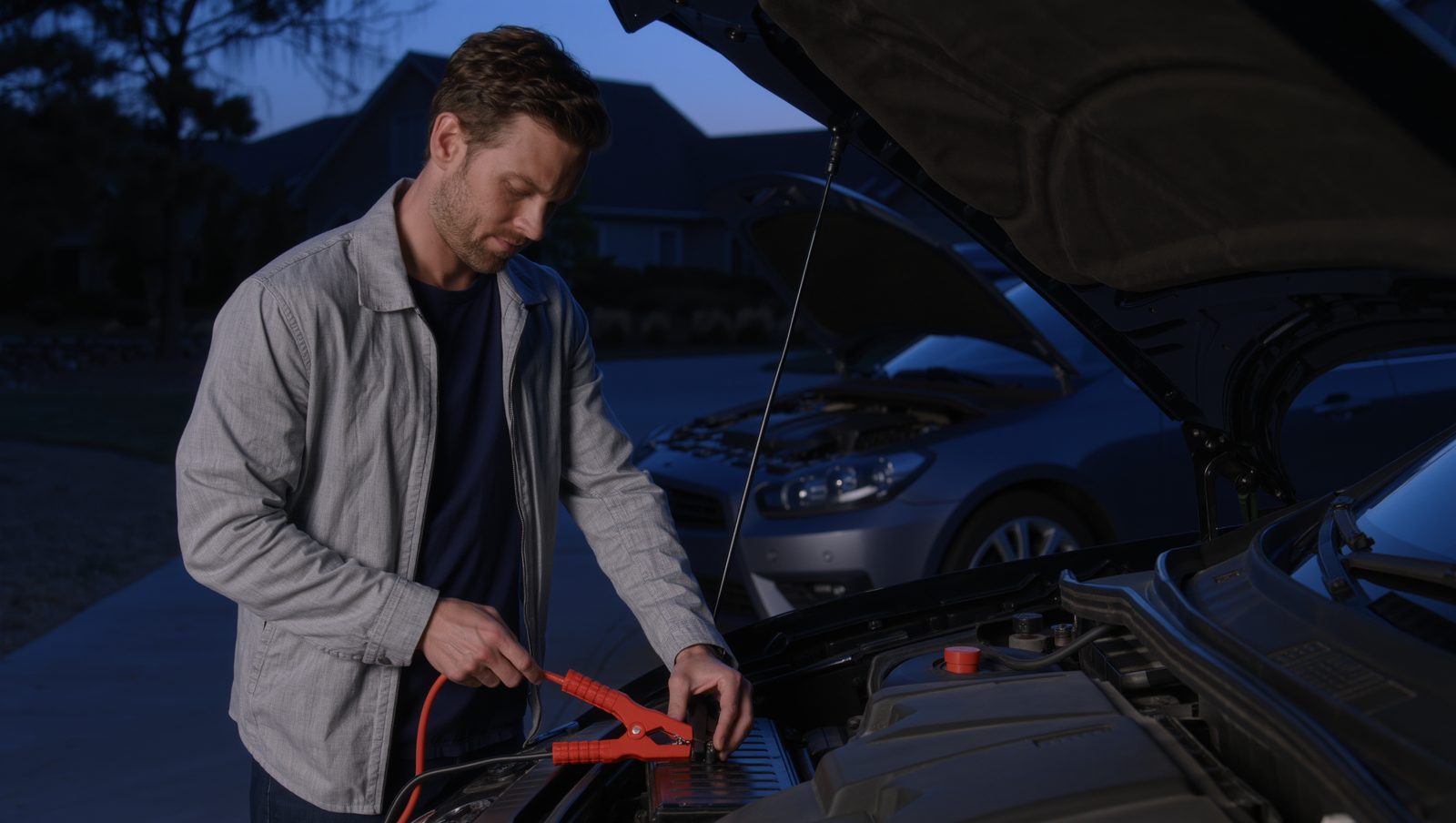
- Try a jump-start if the signs point to the battery. If the car starts and stays running, the battery or charging system is the suspect. If it starts and dies when the cables come off, suspect the alternator. If a jump makes no difference, suspect the starter, relay or ignition switch.
- Check the fuses and starter relay using the diagram in your owner's manual.
- Do not crank continuously. Limit each attempt to no more than about 15 seconds and rest between tries so you do not overheat the starter or drain the battery further.
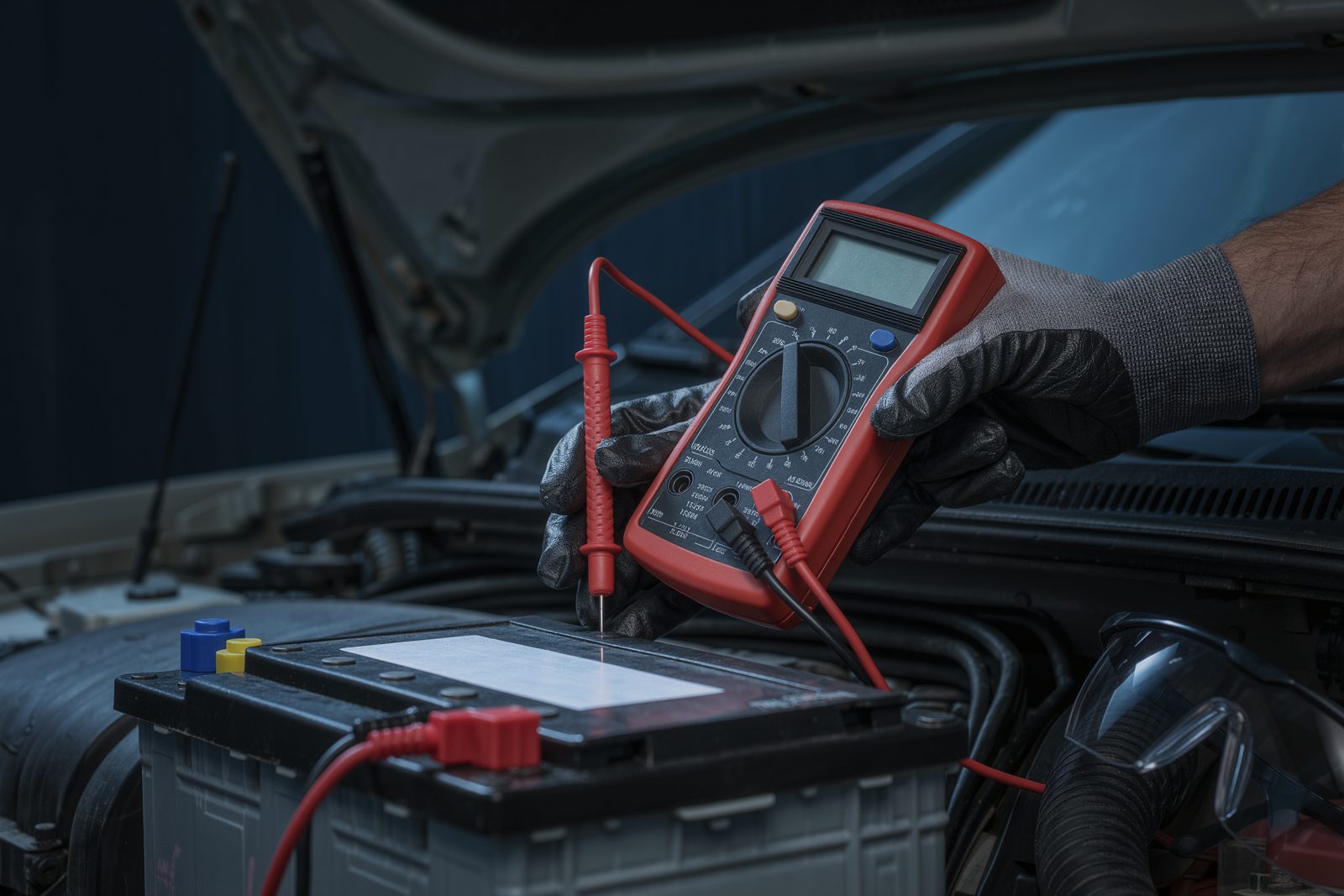
Stop and get help if you see smoke, smell burning, notice a swollen or leaking battery, or hear grinding. Do not jump-start a damaged battery, and wear eye protection and gloves when working around battery acid. Avoid improvised fixes such as bridging starter terminals with a screwdriver, which can cause injury or electrical damage.
When to Call for Help
Getting help on the spot makes sense when:
- The car will not crank after a jump-start.
- You hear a single click or grinding, which points to the starter.
- The car is somewhere you cannot easily work on it, such as a parking garage or a roadside.
- The problem keeps coming back.
Depending on the cause, the right help might be a mobile battery service to test or replace the battery, an auto electrician for wiring, relay or ignition faults, or a mobile mechanic for diagnostics and starter replacement. Many of these jobs can be done where the car is parked, which can save you a tow. Our guide to mobile mechanic prices explains how quotes are put together.
Finding a Provider Through AutoServe360
Use find a provider and pick Battery Service, Auto Electrician, Diagnostics or Mechanic with a search radius. Each listing is an independent business with its own profile, prices and coverage area; AutoServe360 connects you and handles payment but does not do the repair.
Your request includes a $50 commitment fee that goes toward the final price. If the provider declines or does not answer within 24 hours, it is refunded, and the provider is paid after you confirm the job is complete. Availability depends on whether a provider covers your location. The how it works page has the details.
Frequently Asked Questions
Why is my car not turning over but I have power?
The dash lights and radio need much less current than the starter, so they can work while the battery is too weak to crank the engine. If the lights stay bright and you hear a single click or nothing, the starter, starter relay, ignition switch or a safety switch is more likely than the battery.
Does clicking mean a dead battery or the alternator?
Rapid clicking usually means the battery does not have enough charge to turn the starter, often because of a weak battery or poor connections. The alternator becomes the suspect when the battery keeps going flat after it has been charged or jumped, or when the car dies shortly after a jump.
How can I tell if it's the battery or the starter?
Try a jump-start. If the car cranks normally with a jump, the battery or connections are the likely cause. If the dash lights stay bright and you still get one click or no crank with a good jump, the starter or its relay is the more likely problem.
How can you tell if it's the battery or the alternator?
If the car starts with a jump and keeps running, then will not start again later, the battery may not be holding a charge or the alternator may not be recharging it. Check the voltage with the engine running: AAA says about 13.8 to 14.2 volts is normal. A lower reading points to the alternator or its belt. A charging system test at a parts store or by a mobile provider checks both.
What are the signs of a bad starter?
A single loud click, grinding or whirring without the engine turning, cranking that works only some of the time, and smoke or a burning smell after repeated attempts. A starter that has been failing may have worked again after a few tries before stopping completely.
Can you jump-start a car with a bad starter?
Usually not. A jump adds battery power, but a starter that is worn or has a failed solenoid still will not turn the engine. If a jump does not change anything, have the starter and its relay tested.
Does no crank always mean a dead battery?
No. A dead battery is the most common cause, but loose terminals, a bad ground cable, a failed starter or relay, a blown fuse, the ignition switch, and the neutral safety switch can all stop the engine from cranking.
Why does my car start sometimes and not others?
Intermittent no-crank problems often come from a loose or corroded connection, a starter that is wearing out, a failing ignition switch, or a neutral safety switch that only makes contact in certain shifter positions. Note when it happens, such as in cold weather or after driving, to help a mechanic narrow it down.
Final Thoughts
When your car won't turn over, start by listening. Rapid clicking points to the battery or connections, a single click to the starter or relay, and silence to the ignition switch, a fuse or a safety switch. Check the simple things first, try a jump if the signs point to the battery, and stop if you see smoke or a damaged battery.
Still no crank? Request a battery, electrical or mechanic provider who covers your area.
Still will not crank?
Search for independent battery, auto electrical and mechanic providers and check whether one covers your area.