On this page
Confirm It Is Actually the Battery
A few simple signs tell you a lot before you reach for cables.
| Signs that point to the battery | Signs that point somewhere else |
|---|---|
| Dash lights are dim, flicker or do not come on | Dash lights stay bright but you hear one loud click or nothing |
| Rapid clicking when you try to start | Engine cranks at normal speed but never fires |
| Slow, labored cranking, often worse on cold mornings | Car dies while you are driving |
| A light or accessory was left on, or the car sat unused for weeks | Grinding or whirring without the engine turning |
If your car matches the right-hand column, a jump-start probably will not fix it. Our guide on why a car won't turn over covers starter, ignition and charging causes in more detail.
Before anything else, open the hood and look at the battery terminals. White or green crust on the posts, or a cable you can wiggle by hand, can stop current from flowing even when the battery itself is fine. With the car off, tightening a loose clamp is sometimes all it takes.
Get Safe Before You Fix Anything
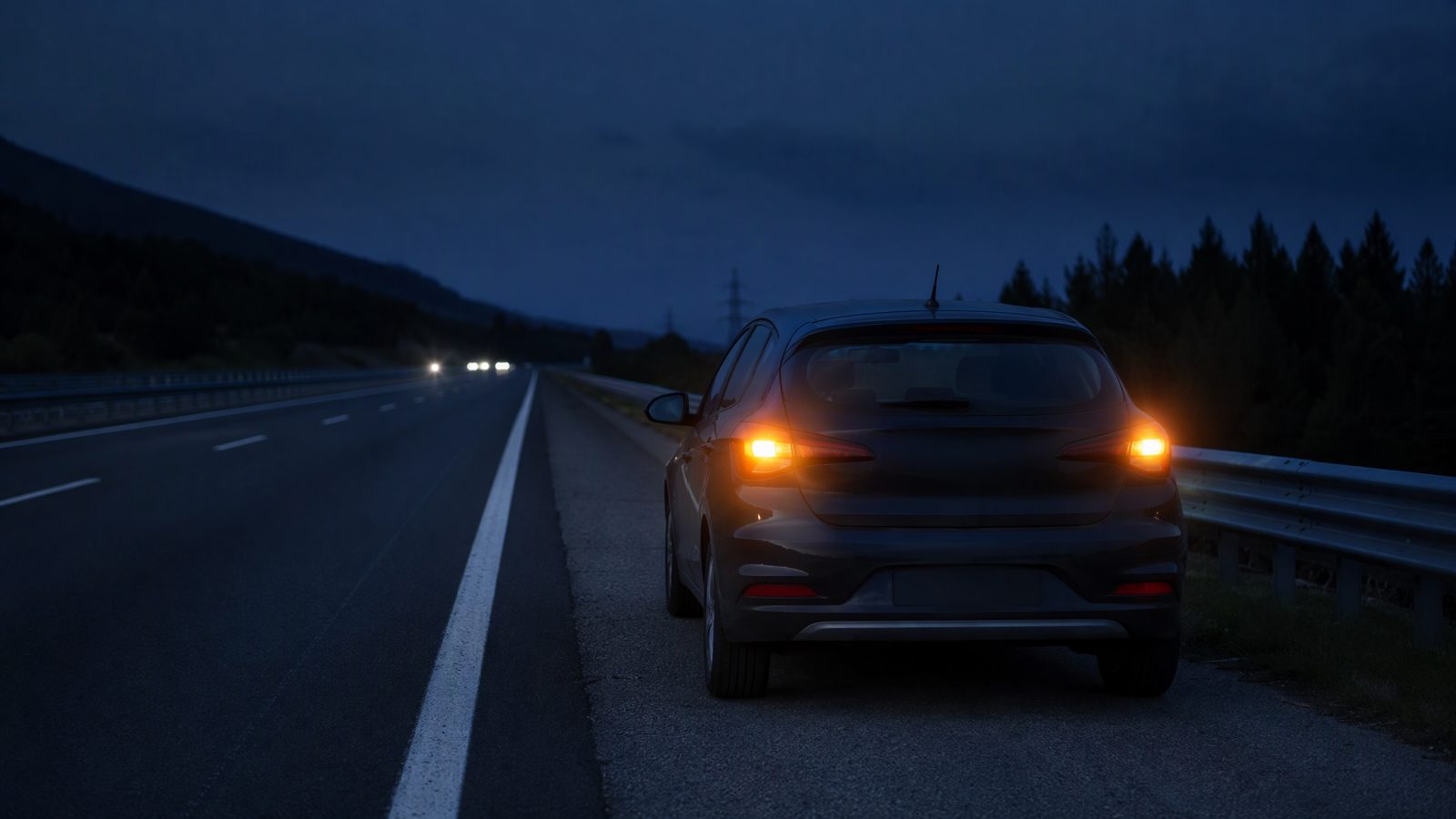
If the battery died in your driveway, skip ahead. If it died on the road, safety comes first.
- Turn on your hazard lights if they still work.
- If the car is in a travel lane or on a narrow shoulder and you cannot move it, stay buckled in unless you can walk somewhere safer well away from traffic.
- Call 911 if you are stopped in a dangerous spot, if anyone is hurt, or if you see smoke or smell burning.
- Do not stand between two cars or lean over the engine bay on a busy shoulder to attempt a jump.
Your Options for Getting the Car Started
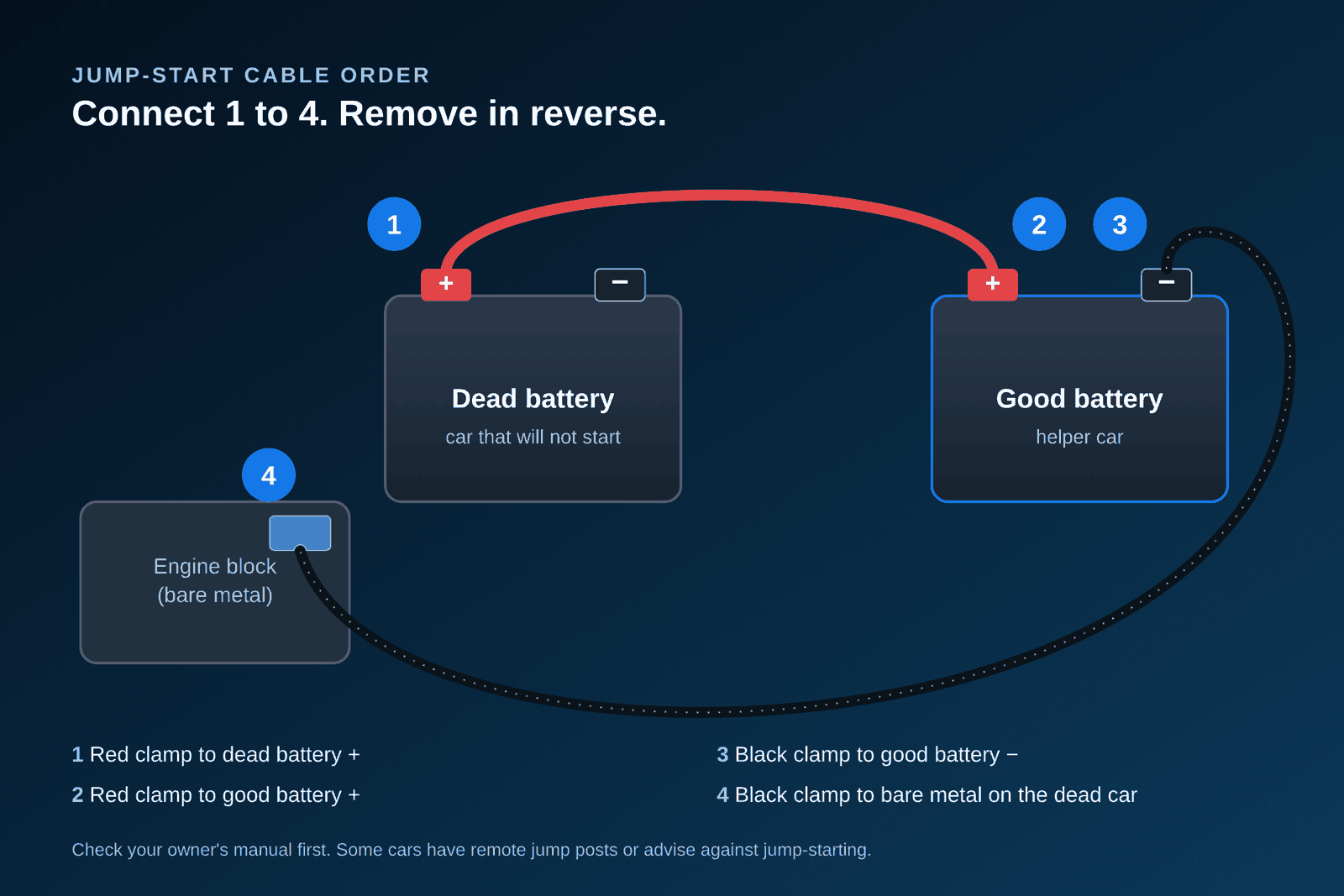
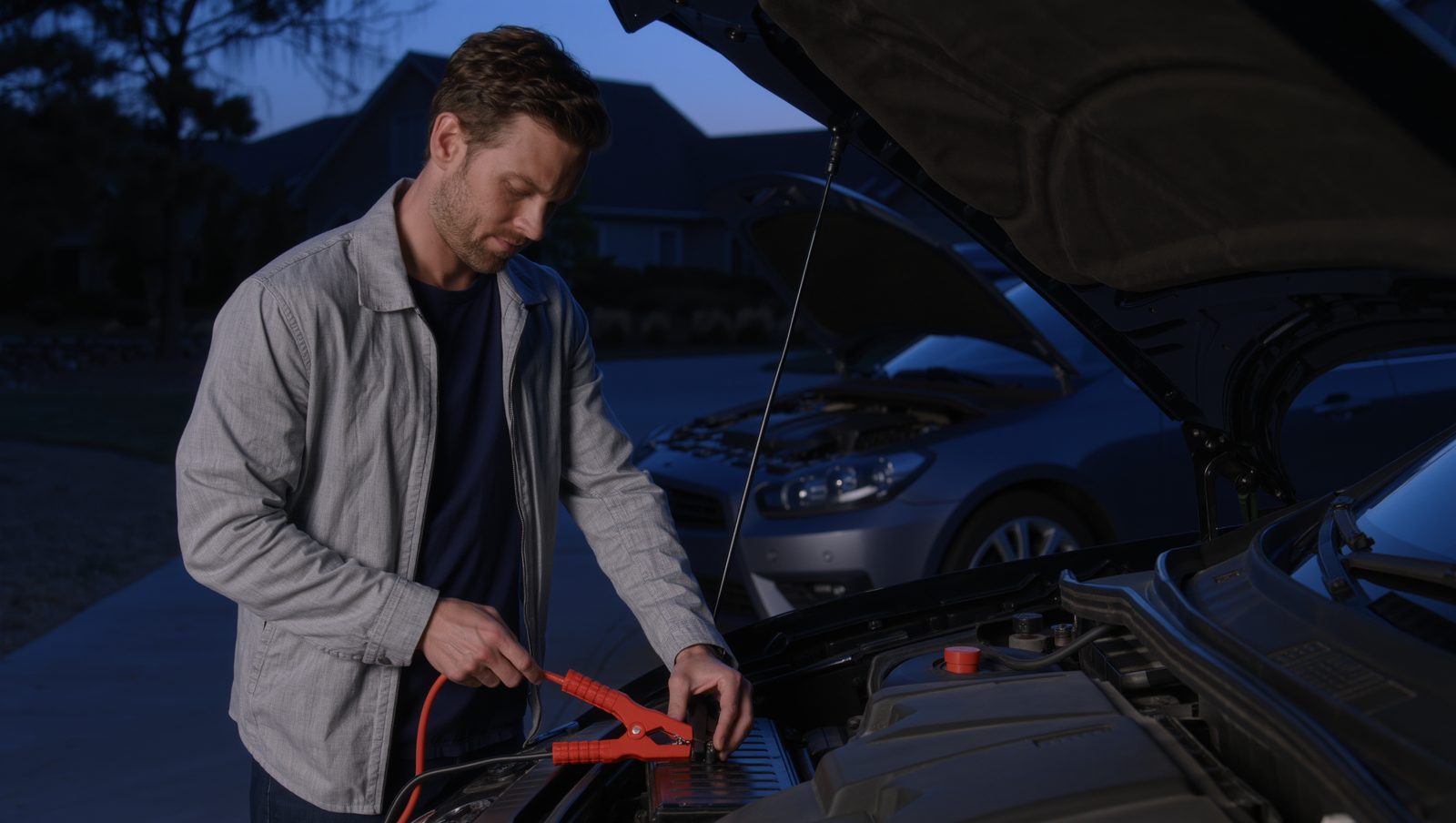
Option 1: Jump-start with cables and a second car
This is the classic fix and works well when the battery is simply drained, for example after a dome light was left on overnight. Check your owner's manual first. Some cars have remote jump-start posts under the hood, and a few manufacturers warn against jump-starting at all because of sensitive electronics.
- Park the working car close enough for the cables to reach, but do not let the cars touch. Turn both cars off and set the parking brakes.
- Connect one red clamp to the positive (+) terminal of the dead battery.
- Connect the other red clamp to the positive (+) terminal of the good battery.
- Connect one black clamp to the negative (-) terminal of the good battery.
- Connect the last black clamp to a bare, unpainted metal part of the engine or chassis on the dead car, away from the battery. This keeps any spark away from battery gases.
- Start the working car and let it run for a few minutes.
- Try to start the dead car. If it does not start, wait a few more minutes and try again. Stop after three or four attempts.
- Once it starts, remove the cables in reverse order: black from the metal ground, black from the good battery, red from the good battery, red from the formerly dead battery.
Option 2: Use a portable jump starter
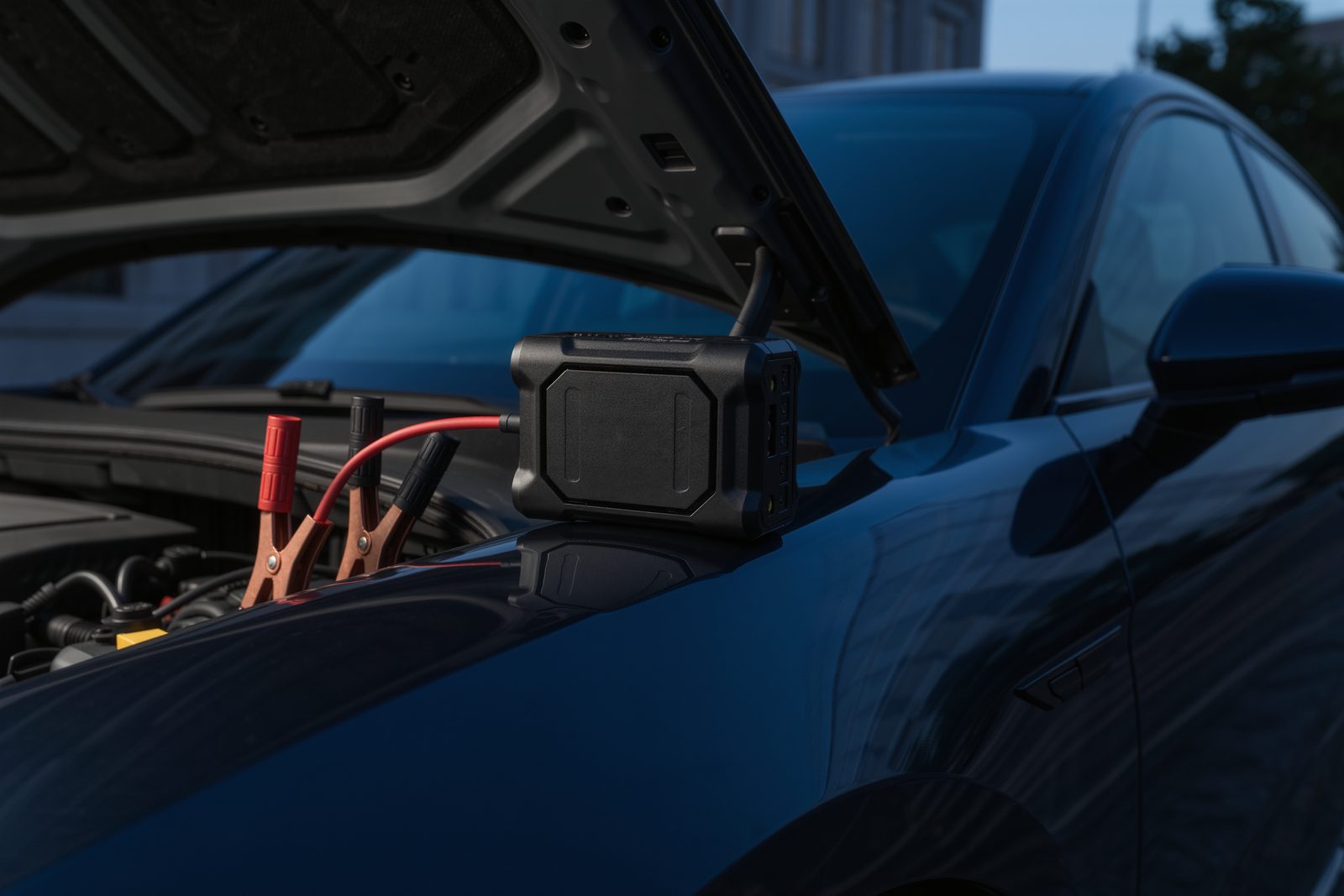
A portable jump starter is a compact lithium or lead-acid pack with built-in clamps. It lets you jump the car without a second vehicle, which is why it is the most useful tool to keep in the trunk if you often park alone or late at night. The hookup is similar: red to positive, black to a ground point or the negative terminal as the unit's instructions say, then start the car. Keep the pack charged. A drained jump starter is no help when you need it.
Option 3: Charge the battery where it sits
If the car is at home and you are not in a hurry, a plug-in battery charger is gentler than a jump and lets you see whether the battery recovers. A deeply drained battery can take several hours or longer to charge, depending on the charger's output and the battery's size. A smart charger that switches to maintenance mode is a good choice for cars that sit for weeks at a time.
Option 4: Get a mobile battery provider or roadside help
If you have no cables, no second car, or the battery has already failed once this week, it often makes more sense to have someone come to you. Your options usually include a roadside plan through your car insurance, credit card, vehicle warranty or an auto club, or a local mobile battery service that can test the battery and replace it on the spot if needed.
On AutoServe360 you can search for independent mobile battery replacement providers by service type and distance. Each provider sets their own prices and service area, and coverage depends on where you are.
After the Car Starts
Getting the engine running is only half the job.
- Keep the engine running. Do not shut it off at the next stop if you can avoid it.
- Drive for a while so the alternator can put charge back into the battery. Consumer Reports suggests driving for at least 20 minutes after a jump. Highway driving does more than idling in a parking lot.
- Have the battery and charging system tested within a day or two. Many parts stores and mobile battery providers can do this. A multimeter reading of about 12.6 volts with the engine off generally means a fully charged battery, while a reading below about 12.2 volts means it needs charging or may be failing, according to AAA.
- If the car dies again while you are driving, or the battery warning light comes on, the alternator is the likely culprit rather than the battery.
When a Jump Will Not Fix It
Some batteries are past saving. Replacement is usually the better choice when:
- The battery is swollen, cracked or leaking, or you smell rotten eggs near it. Do not jump-start or charge a damaged battery.
- The car needs a jump again within a few days with no obvious cause, such as a light left on.
- The battery is older than about three to five years, which is a typical lifespan according to AAA and Consumer Reports. Heat tends to shorten it.
- A charger brings it up but the voltage drops quickly once the charger is removed.
- The engine cranks noticeably slower each morning, especially in cold weather.
Jump, Charge or Replace?
| Situation | Best next step |
|---|---|
| Battery drained by a light or accessory left on, battery is under three years old | Jump-start or charge, then drive at least 20 minutes |
| Car died after sitting unused for several weeks | Charge with a plug-in charger, then test |
| Battery needed a jump twice in one week | Test the battery and alternator before buying anything |
| Battery is swollen, leaking or cracked | Replace it. Do not jump or charge |
| Car dies while driving or the battery light is on | Have the alternator and charging system checked |
| Battery is four or more years old and cranking is slow | Replace it before it leaves you stranded |
Why Car Batteries Die
Knowing the cause helps you avoid a repeat.
- Lights or accessories left on. Headlights, interior lights, or a phone charger in an outlet that stays live with the car off.
- Short trips. Repeated short drives do not give the alternator time to recharge what starting the engine used.
- Parasitic drain. A faulty module, aftermarket alarm or dash camera that keeps drawing power with the car off.
- Temperature. Cold slows the chemical reaction inside the battery, which is why weak batteries often fail on the first cold morning. Heat speeds up internal wear.
- Age and corrosion. Older batteries hold less charge, and corroded terminals limit how much current gets through.
- Charging system faults. A failing alternator or a loose drive belt means the battery is never fully recharged.
Getting Battery Help Through AutoServe360
The battery providers listed on AutoServe360 are independent businesses; AutoServe360 runs the marketplace and does not carry out the work. To request help, find a provider by choosing Battery Service and a search radius, check the provider's profile and the area they cover, and ask for a quote.
Sending a request costs a $50 commitment fee, which counts in full toward the price of the job. You get it back if the provider turns the request down or has not replied within 24 hours. Payment reaches the provider once you confirm the work is complete. Our pricing page has the full terms, and how AutoServe360 works walks through each step.
Frequently Asked Questions
How do you start a car if the battery is completely dead?
A battery that is completely flat usually still responds to a jump from another car or a portable jump starter, though you may need to leave the cables connected for a few extra minutes before trying. If it still will not start, charge it with a plug-in charger or have a mobile battery provider test it. A battery that will not take or hold a charge needs replacing.
Can a car battery be so dead it can't be jumped?
Yes. A battery with an internal short, a damaged cell or severe sulfation from sitting discharged for a long time may not respond to a jump at all, or may start the car once and fail again soon after. In that case, replacement is the realistic fix.
How long should you drive after jump-starting a car?
Consumer Reports suggests at least 20 minutes, and longer is better, especially at steady speeds. Even then, a deeply drained battery may not be fully recharged by driving alone, so a test or a full charge afterward is a good idea.
How long can a car sit before the battery dies?
There is no single answer. A healthy battery in a car with normal standby drain can often sit for a couple of weeks, but an older battery, cold weather, or accessories that draw power with the car off can shorten that a lot. If a car will sit for a month or more, a battery maintainer helps.
What drains a car battery when the car is off?
Common causes include interior or trunk lights that stay on, a glove box light, aftermarket electronics such as alarms or dash cameras, a module that does not go to sleep, and a failing alternator diode. If the battery keeps dying overnight with nothing left on, have a parasitic drain test done.
How long does it take to charge a dead car battery?
It depends on how drained the battery is and the charger's output. A low-amp charger can take many hours, sometimes overnight, while a higher-output charger is faster. Smart chargers show when the battery is full and then switch to a maintenance mode.
Can a dead car battery be revived?
Often, yes, if it was simply drained. A jump-start or a full charge with a plug-in charger brings most healthy batteries back. A battery that is old, damaged, or has sat completely flat for a long time may not recover, or may lose its charge again quickly.
How can you tell if a car battery is bad or just dead?
Charge it fully, let it rest for a few hours, then check the voltage or have it load tested. A battery that reads about 12.6 volts and passes a load test was just drained. One that will not reach a full charge, drops quickly, or fails the load test is bad and should be replaced.
Quick Recap
When your car battery is dead, start with a quick check of the symptoms and the terminals, get safe if you are on the road, then choose the option that fits your situation: a jump-start, a portable starter, a charger, or a provider who comes to you. After the car starts, drive long enough to recharge and get the battery tested. If the battery is old, damaged, or keeps failing, replacing it saves you from the next surprise.
Prefer to have someone come to you? Search for a battery service provider in your area and send a request.
Need someone to test or replace the battery?
Search for independent battery service providers and check whether one covers your area before you send a request.