On this page
First, Get to a Safe Spot
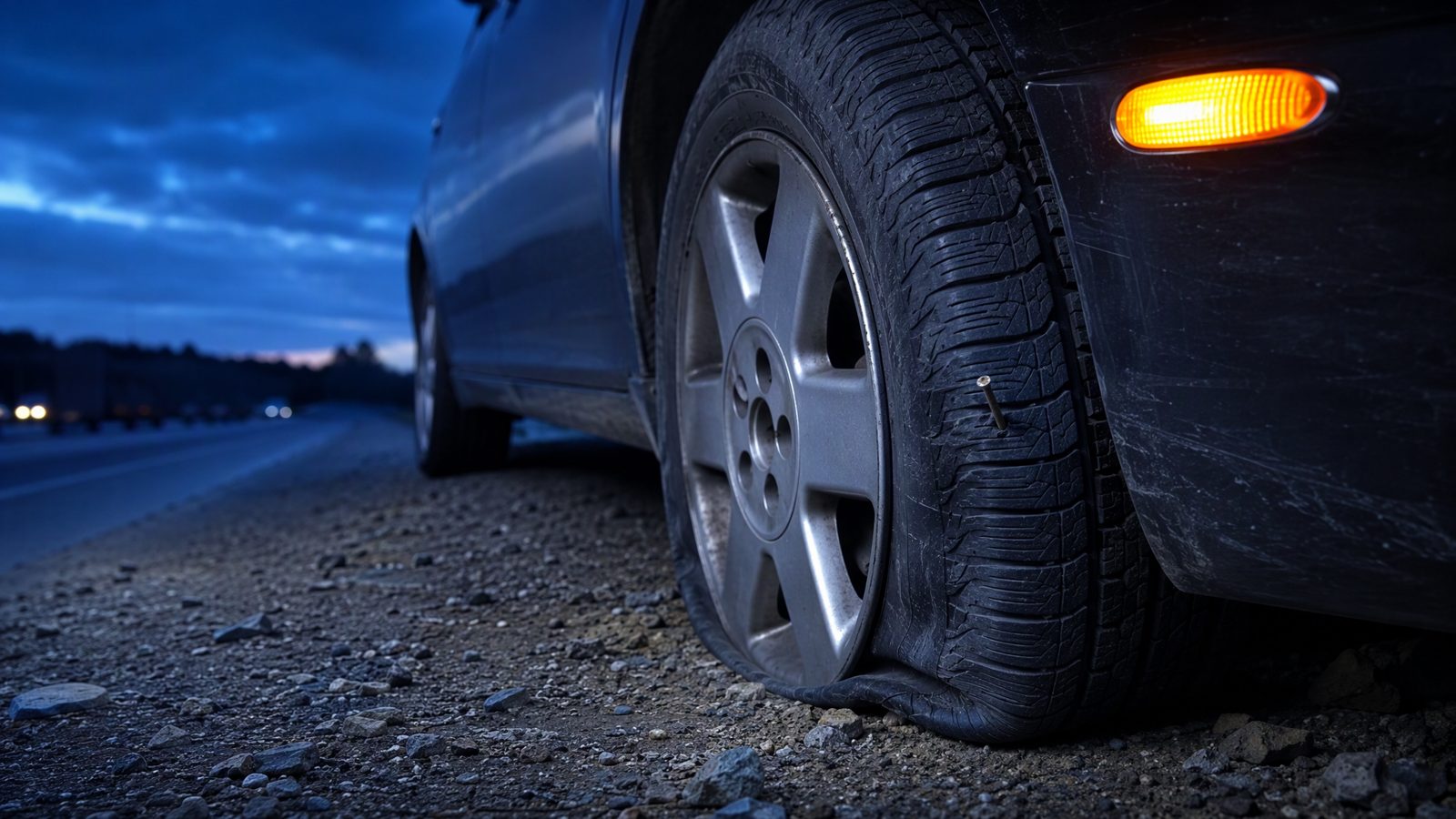
Before you call anyone, make sure you are out of harm's way.
- Do not brake hard or swerve. Grip the wheel, ease off the gas, and let the car slow down gradually.
- Signal and move to the right shoulder, an exit, or a parking lot. Driving slowly for a short distance on a flat to reach a safer spot is better than stopping in a lane, even if it damages the wheel.
- Turn on your hazard lights and set the parking brake.
- On a busy highway, stay in the car with your seatbelt on unless you can walk to a spot well away from traffic, such as behind a guardrail. Getting out on the traffic side is one of the most dangerous things you can do on a shoulder.
- Set out reflective triangles or flares only if you can do it without walking into traffic.
- Note your location: the nearest exit, mile marker or cross street, or drop a pin in your phone's map app.

Who to Call for a Flat Tire: Your Options
| Who to call | Best for | Things to know |
|---|---|---|
| Roadside coverage you already have (insurer, warranty, credit card or auto club) | Most flats, if you have coverage | Check your insurance card or app first. Plans usually mount your spare, and may tow you if you have no usable spare. Some limit the number of calls per year |
| A mobile tire or roadside provider | No coverage, a long wait for your plan, or you want the tire repaired or replaced on the spot | Some providers only swap the spare, while others can repair or replace the tire where you are. Ask before booking |
| Your rental car company | Any flat in a rental | Call the rental company's roadside number before arranging anything else. Some rental vehicles have no spare, and outside help may not be covered |
| A towing company | No spare, a damaged wheel, or more than one flat | The car goes to a tire shop or your home. Confirm where they can take it |
| A friend or family member | A flat at home, at work or in a safe parking lot | Helpful if they can change a tire and you have a working spare |
| 911 | A safety emergency | Call if someone is hurt, the car is in a travel lane, traffic is not slowing, or you are somewhere unsafe |
On some highways, state or local service patrols help stranded drivers, and in certain areas you can request help through a 511 traveler information line. Availability varies by state and road, so do not count on it, but it is worth knowing about if you drive the same routes often.
Can You Call 911 for a Flat Tire?
Only when it is a safety issue. A flat on a quiet street or in a parking lot is not a 911 call. A flat that leaves you stopped in a lane, on a narrow shoulder with fast traffic, on a bridge, or somewhere you feel threatened is a reason to call. Police can protect the scene with their lights, and in some cases can help you get to a safer place. They are not a tire service, so expect to arrange the repair yourself afterward.
What If You Do Not Have a Spare?
Many newer cars come without a spare tire to save weight and space. If yours does not have one, check what it does have.
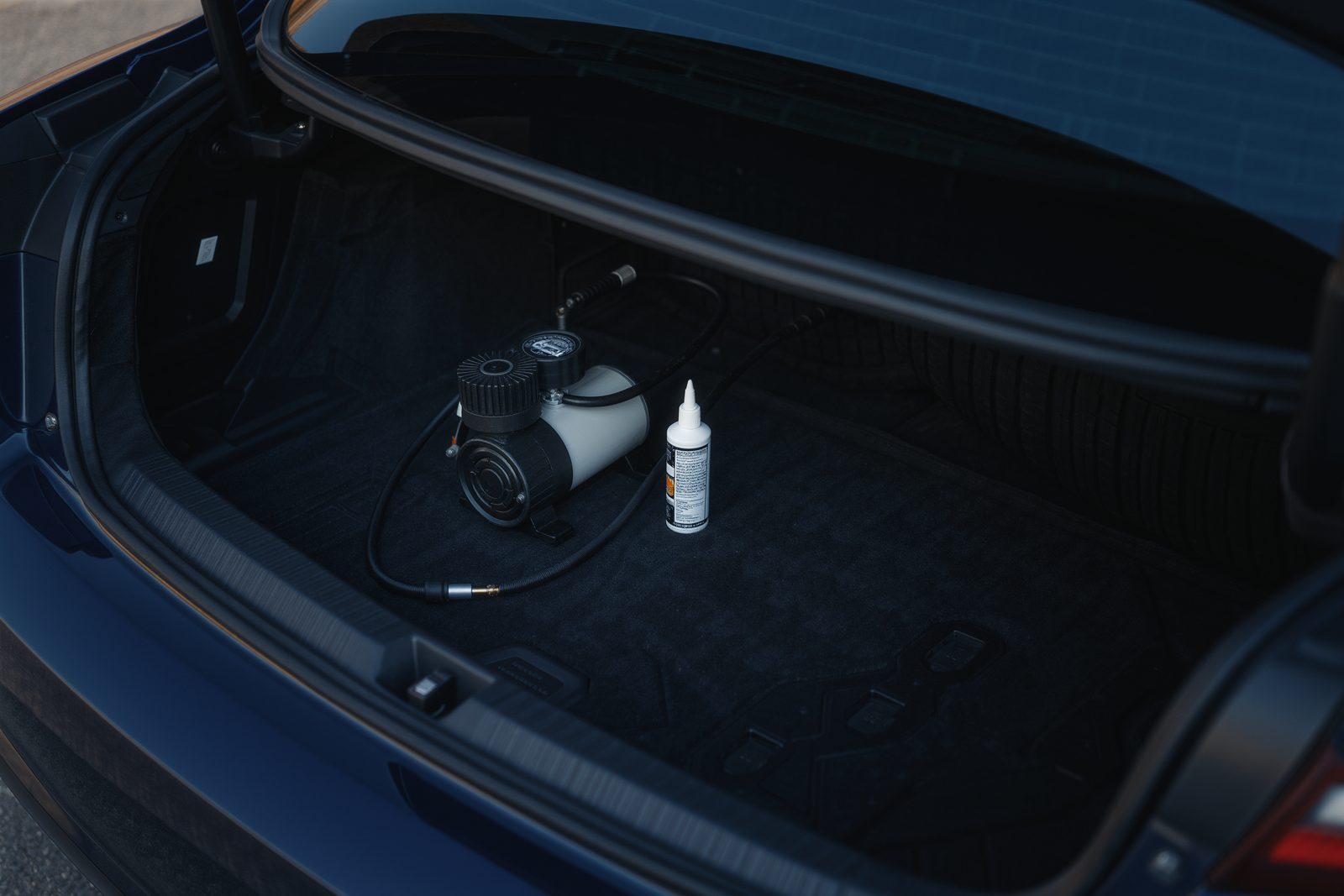
- Tire inflator and sealant kit. Usually found under the trunk floor. It can seal small punctures in the tread and get you to a shop, but it will not fix a sidewall cut or a blown-out tire, and some tire shops need to clean out the sealant before they can repair the tire.
- Run-flat tires. These are built to support the car for a limited distance after losing air. Many are rated for roughly 50 miles at up to 50 mph, but check your owner's manual for your car's limits and have the tire inspected soon.
- No spare and no kit. Call a mobile tire provider who can repair or replace the tire where you are, or arrange a tow to a tire shop.
Repair, Replace or Use the Spare?
Not every flat needs a new tire. According to the U.S. Tire Manufacturers Association, a puncture can be repaired only if it is in the tread area and no larger than one-quarter inch (6 mm) across. The tire must be removed from the wheel, and a plug alone is not an acceptable repair: it needs a plug and a patch.
You will usually need a new tire if:
- The damage is in the sidewall or the shoulder where the tread meets the sidewall.
- The puncture is larger than a quarter inch or there are several close together.
- The tire was driven on while flat long enough to damage the inner structure.
- The tread is already worn down to 2/32 of an inch, the point at which a tire is generally considered worn out.
A compact spare, often called a donut, is meant for short distances at reduced speed. The limits are usually printed on the spare's sidewall or in your owner's manual. Get the original tire repaired or replaced as soon as possible.
If You Change the Tire Yourself
If you are somewhere safe, on flat, firm ground and away from traffic, changing the tire yourself can be the fastest fix.
- Set the parking brake and put the car in park, or in gear for a manual. If you have wheel chocks, or a large rock or block, place it against the tire diagonally opposite the flat.
- Loosen the lug nuts slightly while the tire is still on the ground.
- Place the jack at the lift point shown in your owner's manual and raise the car until the tire is just off the ground.
- Remove the lug nuts and the flat tire, then mount the spare.
- Thread the lug nuts on by hand, lower the car, then tighten them fully in a star pattern.
- Check the spare's pressure as soon as you can, and have the lug nuts checked after a short drive.
If the ground is soft or sloped, traffic is close, or the lug nuts will not budge, stop and call for help.
Getting Help Through AutoServe360
AutoServe360 is a marketplace that connects drivers with independent automotive and roadside providers. It does not change or repair tires itself. You can find a provider by choosing Tires & Wheels and a search radius, check the provider's coverage area and profile, and send a request for a quote. Our mobile tire repair page explains the tire services providers may offer, and the roadside assistance page explains the other roadside services providers can list. If the problem is fuel rather than a tire, see what to do if you ran out of gas.
Requests carry a $50 commitment fee, credited in full toward whatever the job costs. If no reply arrives within 24 hours, or the provider declines, the fee comes back to you. The provider is not paid until you confirm the tire work is finished. Prices and service areas are set by each provider, so coverage near you is not guaranteed. The how it works page has the full process.
Frequently Asked Questions
Who should you call if you get a flat tire?
Start with any roadside coverage you have through your insurer, warranty, credit card or auto club. If you have no coverage or the wait is long, call a mobile tire or roadside provider. In a rental, call the rental company first. Call 911 only if you are in danger or blocking traffic.
Is it okay to call 911 for a flat tire?
Yes, if the flat leaves you in a dangerous position, such as stuck in a lane, on a narrow shoulder with fast traffic, or if anyone is hurt. For a flat in a safe spot, call roadside help or a tire provider instead.
Can you call someone to change a flat tire?
Yes. Roadside plans, mobile tire providers and towing companies can all come to you. Some will only mount your spare, while mobile tire services may be able to repair or replace the tire on the spot.
What do you do if you get a flat tire on the freeway?
Slow down gradually without braking hard, signal and move to the right shoulder or the next exit, turn on your hazards, and stay buckled in unless you can get well away from traffic. Then call your roadside coverage or a provider, and call 911 if you are stuck in a lane.
Can I drive on a flat tire to get somewhere safe?
For a short distance at low speed, yes, if it gets you out of a dangerous spot. Expect it to damage the tire and possibly the wheel. Do not keep driving on a flat once you are safe.
Can AAA or my insurance change a flat tire at home?
Many roadside plans cover a flat at home as well as on the road, but terms vary. Check your plan details or call the number on your card.
How long can you drive on a spare tire?
Compact spares are designed for short distances at reduced speed. Check the limits printed on the spare or in your owner's manual and replace or repair the original tire as soon as you can.
In Short
The right person to call for a flat tire depends on where you are and what you have. Get to a safe spot first, then use roadside coverage if you have it. If you do not have coverage, or you have no spare, a mobile tire provider or a tow is the practical option. Call 911 only when the situation is dangerous.
If you would like a tire provider to come to you, see whether one serves your area.
Need help with a flat tire?
Search for independent tire providers and check whether one covers your area. If you are stopped somewhere dangerous, call 911 first.