On this page
- What Happens When a Car Runs Out of Gas
- What to Do Right After You Run Out of Gas
- Where You Stopped Changes the Plan
- Who to Call When You Run Out of Gas
- How Much Gas Do You Need?
- How to Restart a Car After It Runs Out of Gas
- Can Running Out of Gas Damage Your Car?
- How to Avoid Running Out of Gas
- Getting Fuel Delivered Through AutoServe360
- Frequently Asked Questions
- Key Takeaways
What Happens When a Car Runs Out of Gas
Most cars give a warning before they stop. You may notice sputtering, surging, or a loss of power when you press the accelerator, especially going uphill or around a corner, as the last fuel sloshes away from the pickup.
When the engine shuts off, two things change right away. Power steering gets much heavier, and the brake booster loses its assist after a press or two, so the pedal feels hard and the car takes longer to stop. The brakes still work, but you have to push much harder. Knowing this ahead of time helps you stay calm and steer to a safe spot while the car is still rolling.
What to Do Right After You Run Out of Gas
- Use your momentum. As soon as the engine falters, signal and move toward the right shoulder, an exit ramp, or a parking lot while you still have speed. Do not stop in a travel lane if you can avoid it.
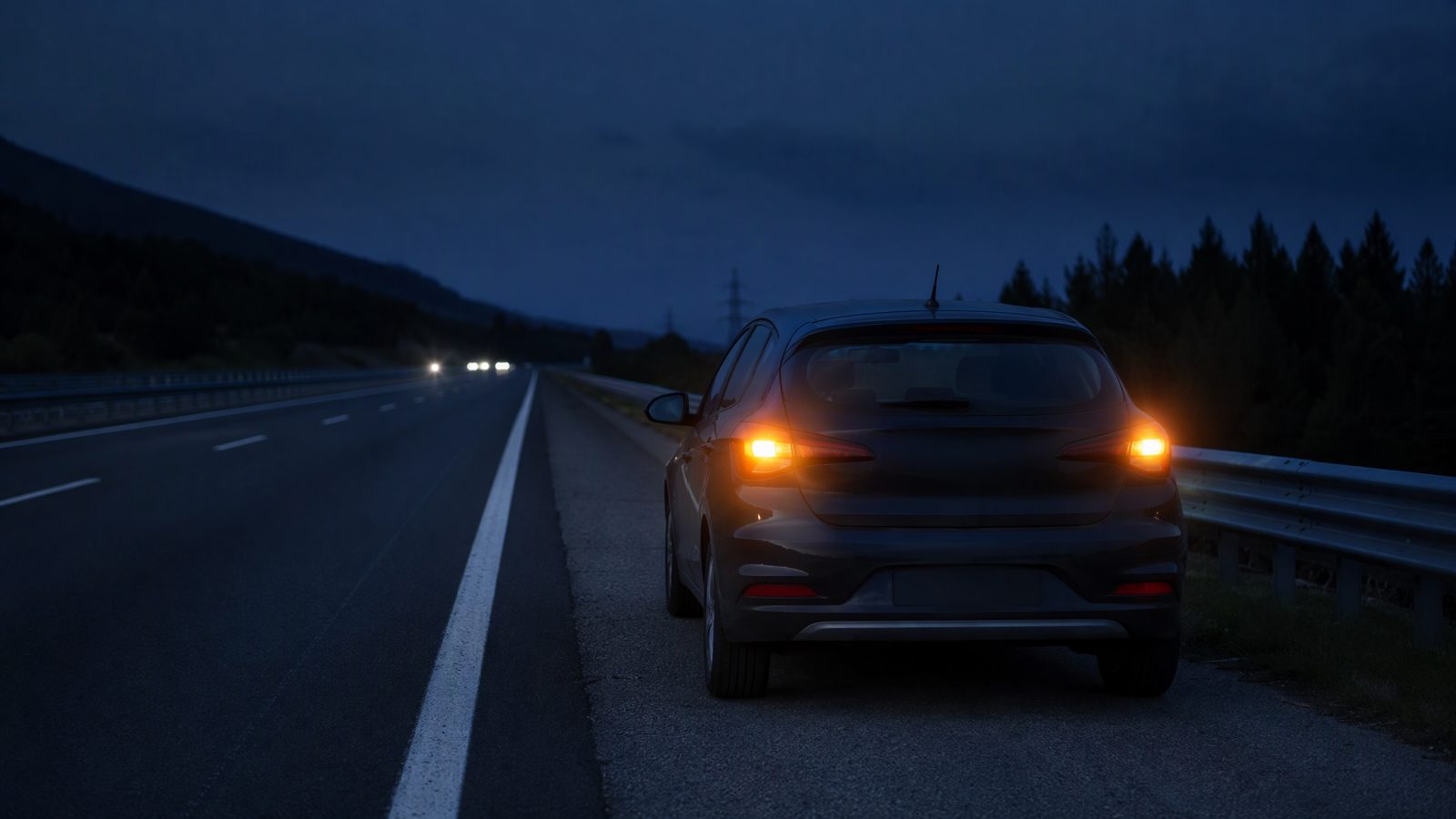
- Turn on your hazard lights as soon as you know you are stopping.
- Stop as far from traffic as you can, on level ground if possible. Set the parking brake and turn the wheels away from the road.
- Decide whether to stay in the car. On a busy highway, staying buckled in is usually the safest choice unless the car is in a lane or you can walk to a spot well away from traffic, behind a guardrail. On a quiet street or in a lot, you can step out safely.
- Call 911 if the car is stopped in a travel lane, on a blind curve, or anywhere you feel unsafe. Dispatchers can send police or a highway assistance unit to protect the scene.
- Note your exact location. Use your phone's map pin, the nearest mile marker, an exit number, or a cross street. Whoever comes to help will need it.
Avoid walking along a highway or crossing lanes on foot to reach a gas station, especially at night.
Where You Stopped Changes the Plan
| Where you are | Safest next step |
|---|---|
| Highway or interstate shoulder | Stay buckled in with hazards on. Call for fuel delivery or roadside help. Call 911 if you are in a lane or exposed |
| City street | Pull to the curb or into a lot. A friend with a gas can or a delivery provider can reach you quickly |
| Gas station is visible and within a short walk on a sidewalk | Walking can work in daylight. Buy an approved gas can and enough fuel to restart |
| Rural road with no phone signal | Stay with the car if it is off the road. Use hazards or a reflective triangle and wait for a passing driver or patrol rather than walking long distances |
| Late at night or bad weather | Stay in the locked car with hazards on and call for help rather than walking |
Who to Call When You Run Out of Gas
You probably have more options than you think. Check these in order:
- Roadside coverage you may already have. Many car insurance policies, new-car warranties, credit cards and auto clubs include fuel delivery. Look for a roadside number on your insurance card, in your insurer's app, or in your vehicle's owner materials. Some plans bring enough fuel to reach a station at no charge, while others charge for the fuel itself, so ask when you call.
- A mobile fuel delivery or roadside provider. Independent providers and towing companies often deliver fuel to stranded drivers. This is useful if you have no coverage or your plan's wait is long.
- A friend or family member. If someone nearby can bring a gas can, this is often the fastest fix on a city street.
- 911 or a highway patrol. For safety emergencies, not routine fuel. Some states run highway assistance patrols on major routes that can help stranded motorists, and calling 911 from a dangerous spot is the right move.
You can search AutoServe360 for providers listed under mobile fuel delivery and choose a search radius. Providers set their own prices and service areas, so coverage depends on your location. The same options apply to other roadside problems, such as a flat tire.
How Much Gas Do You Need?
You do not need a full tank to get going. A gallon or two is usually enough to restart the engine and reach the nearest station, which is what most roadside fuel services provide. If you are carrying fuel yourself, use only an approved gas can, keep it upright, and never carry gasoline in a container meant for anything else.
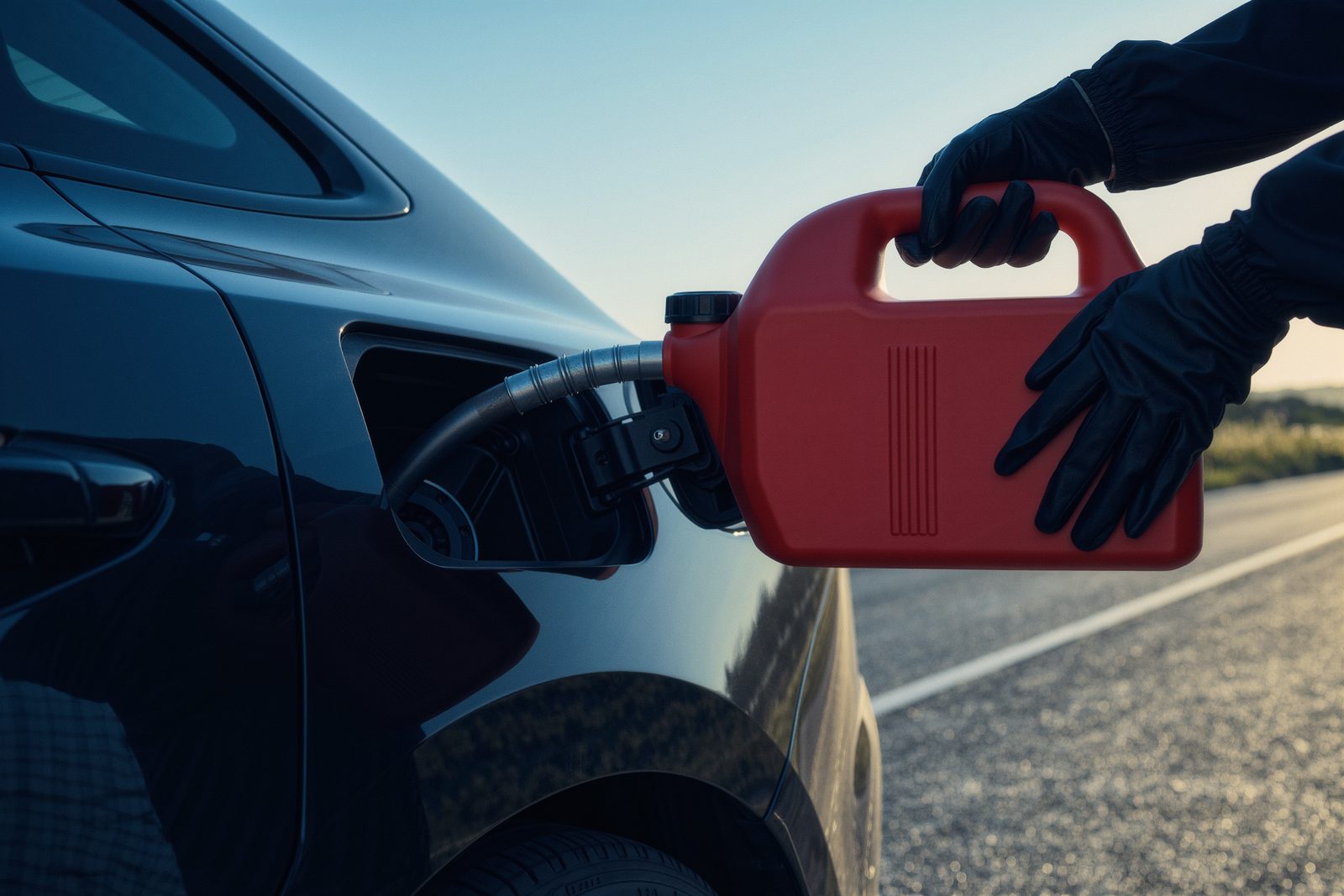
When pouring, turn the engine off, do not smoke, and pour slowly to avoid spills. If you have a newer car with a capless fuel filler, you may need the funnel that came with the car, often stored with the spare tire tools, for a gas can spout to open the flap.
How to Restart a Car After It Runs Out of Gas
Once fuel is in the tank, the fuel system needs a moment to refill.
- Prime the fuel pump. Turn the key to the on position without cranking and wait a few seconds. On push-button cars, pressing the button twice without the brake usually selects the on position, but check your owner's manual. You may hear the pump hum. Turn it off and repeat two or three times.
- Crank the engine. Try to start the car. Crank for no more than about 15 seconds at a time and wait between attempts so you do not overheat the starter or drain the battery.
- Give it a few tries. It may sputter at first while air clears from the lines. Once it runs, let it idle for a moment before driving.
- Go straight to a gas station and fill up.
If the engine still will not start after several attempts, stop cranking. The battery may now be weak, or the fuel pump may need attention. Diesel engines can be harder to restart after running dry because air can get into the fuel system, and some need the system bled before they will start. Check your owner's manual or get help from a mechanic.
Can Running Out of Gas Damage Your Car?
Running out once is unlikely to cause serious damage, but it is not good for the car, and doing it often adds up.
- Fuel pump wear. In most modern cars the electric fuel pump sits inside the tank and uses the fuel around it to stay cool. Running the tank dry, or driving on fumes regularly, lets the pump run hot and can shorten its life.
- Sediment and clogs. Running very low can pull debris from the bottom of an older tank into the fuel filter or injectors.
- Catalytic converter stress. A starving engine misfires, which can send unburned fuel into the exhaust and overheat the catalytic converter.
- Safety risk. Losing power steering and brake assist in traffic is the bigger danger, which is why stopping where you are visible and out of the lane matters.
If the check engine light stays on after you refuel and restart, or the car runs rough, have it looked at by a mobile mechanic or diagnostic provider.
How to Avoid Running Out of Gas
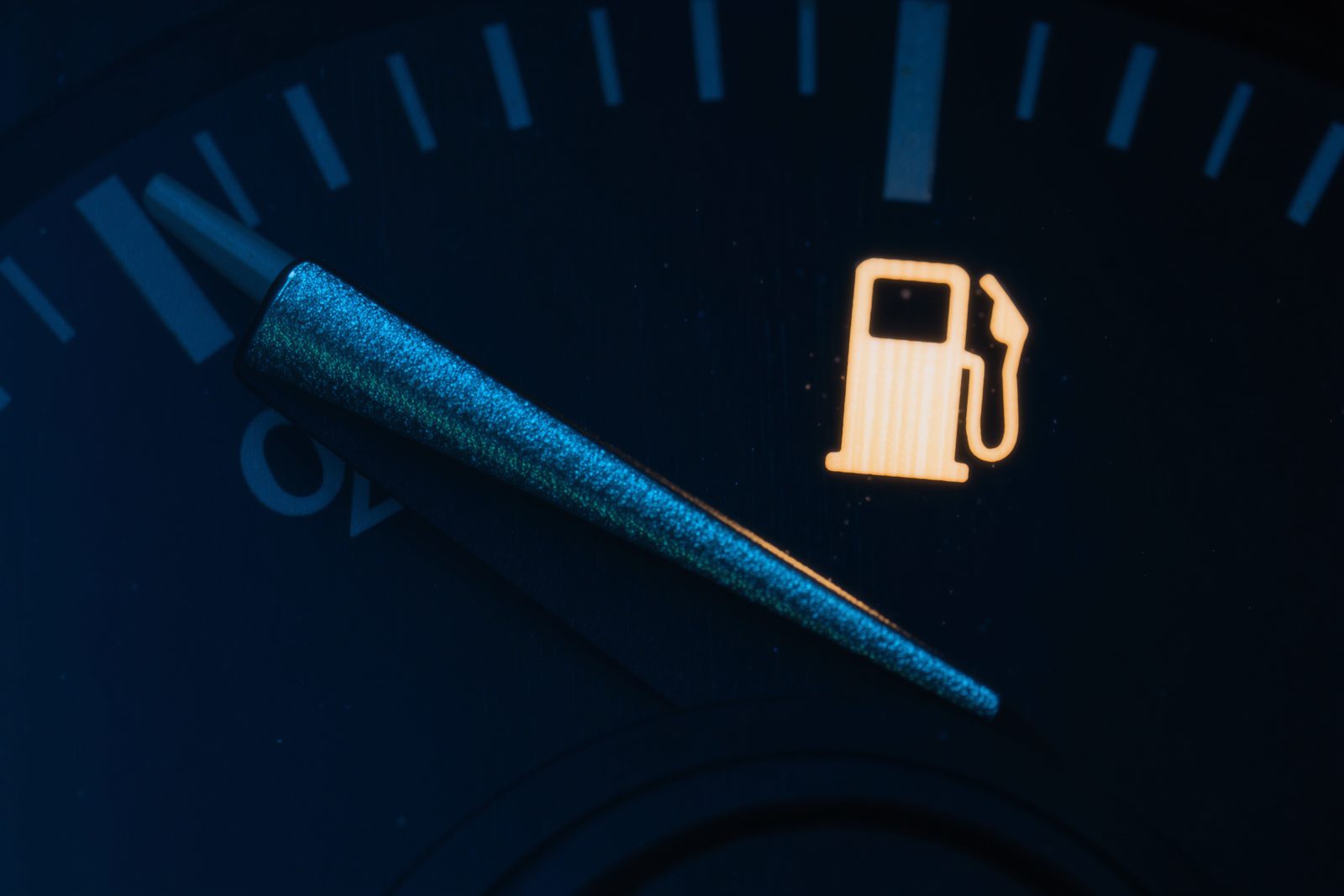
- Treat a quarter tank as your empty, especially before highway trips, rural drives or bad weather.
- Do not trust the range estimate to the last mile. It is based on recent driving and can drop quickly in traffic, on hills, or with a heavy load.
- Plan fuel stops on long trips, particularly on stretches with few exits.
- If your fuel gauge seems wrong or the range drops faster than it used to, have the sending unit or fuel system checked.
Getting Fuel Delivered Through AutoServe360
Fuel on AutoServe360 is delivered by independent providers, not by AutoServe360 itself. Use find a provider, filter for Mobile Fuel Delivery, look at each provider's coverage area and profile, and request a quote.
When you send a request you pay a $50 commitment fee that is applied in full to the job. It is refunded if the provider declines or does not respond within 24 hours, and the provider only receives payment after you confirm the delivery is done. The how it works page covers the process step by step.
Frequently Asked Questions
What should I do if I run out of gas on the highway?
Coast to the right shoulder or the next exit while you still have momentum, turn on your hazards, and stay buckled in unless you can get somewhere well away from traffic. Call your roadside plan or a fuel delivery provider. If the car is stuck in a travel lane or in a dangerous spot, call 911.
Can I call the police if I run out of gas?
If you are in danger, stuck in a lane, or blocking traffic, yes, call 911. For a routine situation where you are safely off the road, call your roadside plan, a fuel delivery provider, or a friend instead. Some states have highway assistance patrols on major routes that may stop to help.
How do I get gas if I ran out on the side of the road?
Call roadside coverage through your insurer, credit card, warranty or auto club, request a mobile fuel delivery provider, or ask someone you know to bring an approved gas can with a gallon or two. Walking to a station is only a good idea if it is close and you can stay on a sidewalk away from traffic.
How do you start a car after it runs out of gas?
Add at least a gallon or two, then turn the key to on (or select on with the start button, without the brake) for a few seconds and repeat two or three times so the fuel pump can refill the lines. Then crank in short bursts of no more than about 15 seconds until it starts.
Can running out of gas damage your car?
Once is rarely serious, but the in-tank fuel pump relies on fuel to stay cool, so running dry can shorten its life. Very low fuel can also pull sediment into the filter, and misfires can stress the catalytic converter. Making a habit of it raises the risk.
How far can you drive once the fuel light comes on?
It varies by car, driving conditions and how accurate the gauge is, so there is no safe universal number. Your owner's manual may list the reserve, but treat the light as a signal to refuel at the next safe opportunity rather than a range to use up.
Does fuel delivery bring a full tank?
Usually not. Most roadside fuel services bring enough to get you to the nearest station, often a gallon or two. Ask when you request help so you know what to expect.
Key Takeaways
If you run out of gas, use the car's last momentum to get off the road, turn on your hazards, and decide whether staying in the car is safer than getting out. Call your roadside coverage, a fuel delivery provider, or 911 if you are in danger. Once you have a gallon or two, prime the pump before cranking, then head straight to a station.
Need fuel brought to you? Look for a mobile fuel delivery provider that serves your area.
Need fuel brought to you?
Search for independent mobile fuel delivery providers and check whether one covers your area. If you are somewhere dangerous, call 911 first.